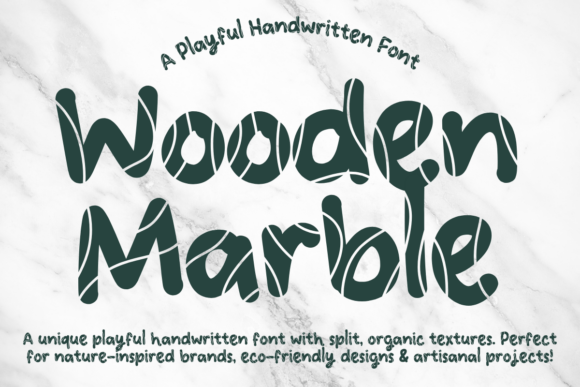
Wooden Marble Font: A Playful Typeface for Creative Makers
There’s something magical about the moment you choose a font that feels just right. I remember sitting at my desk, sketching out mockups for a new line of handmade candles and wondering how to make the labels feel both inviting and authentic. Then I stumbled upon Wooden Marble, and it was like finding the perfect brushstroke to finish a painting.
This handwritten typeface brings warmth and charm to any project. It’s bold, playful, and full of character — the kind of font that whispers stories of creativity and craftsmanship. Whether you're designing product tags, printable wall art, or seasonal greeting cards, Wooden Marble adds a touch of personality that makes your creations stand out.
Bringing Handmade Candles to Life with Wooden Marble
I recently used Wooden Marble for candle labels in my small batch of soy candles. The font’s natural flow and slightly irregular strokes gave the packaging an artisanal feel that matched the organic scent of beeswax and lavender. I paired it with a muted earth-toned background and some subtle botanical illustrations. The result? Labels that felt hand-painted rather than printed — exactly the vibe I wanted for a cozy home goods collection.
What I love most is how the font doesn’t overpower the design but instead enhances it. It invites the viewer to pause, look closer, and imagine the story behind each jar. That emotional connection is what makes a product memorable.
Wooden Marble in Greeting Cards and Invitations
Greeting cards are another area where this font shines. For birthday cards, I used Wooden Marble for the main message — phrases like “Happy Birthday” or “You’re the Best!” — and layered it with delicate floral accents. The combination made the cards feel personal and heartfelt, like they were written by a friend rather than mass-produced.
When working on wedding invitations, I found Wooden Marble added a unique twist to traditional layouts. It worked especially well for the names of the couple or for decorative wording like “Celebrate With Us.” To keep things balanced, I paired it with a clean sans serif font for the address and event details. This contrast brought structure to the design while letting the handwritten style take center stage.
Why It Works for Printables and Digital Downloads
Wooden Marble isn’t just for physical products. I’ve also incorporated it into digital printables like planner pages and SVG-style designs for Cricut and Silhouette users. Its dynamic nature makes it great for titles, headings, and decorative elements in templates. When previewing these digital downloads on Etsy, the font helped convey a sense of modern craftsmanship that resonated with customers looking for something different from generic stock fonts.
For those who sell digital templates, using a font like Wooden Marble can elevate your listings. It adds a premium look to your previews and helps buyers visualize the final product more clearly. Just be sure to check the licensing terms if you plan to use it in commercial projects or resell templates.
Designing Farmhouse Signs and Seasonal Decor
One of my favorite recent projects involved creating farmhouse-style signs for a local boutique. I designed a set of holiday tags and welcome boards using Wooden Marble as the headline font. The font’s texture and rhythm gave the signs a handcrafted, almost wood-carved appearance when printed on kraft paper and paired with minimalist illustrations.
During the holidays, I used it for ornament tags and gift wrap labels too. The font didn’t get lost in smaller sizes, which is always a concern when scaling down for stickers or tags. Instead, its boldness ensured the text remained legible even when printed in 8pt size. That’s not something every decorative font can claim!
Brand Consistency and Emotional Appeal
Consistency is key when building a brand identity, and choosing the right typography plays a big role in that. I’ve started using Wooden Marble across multiple shop items — from tote bag designs to mug transfers — because it maintains a cohesive aesthetic. It feels like part of my creative signature now.
Customers often comment on how the font makes the products feel more personal. That emotional appeal is powerful. People aren’t just buying a product; they’re buying into the feeling it evokes. And when that feeling is warm, genuine, and beautifully designed, it sets your work apart in a crowded marketplace.
Readability Tips for Cutting Machines and Small Text
If you’re planning to use Wooden Marble in cutting machine projects, here are a few tips to ensure clarity and quality:
- Test at scale: Before sending anything to the cutter, print a sample label or sticker at the actual size you’ll be using. This helps catch any tiny letters or intricate flourishes that might become unreadable when reduced.
- Use proper spacing: Handwritten fonts can sometimes have tight spacing. Make sure your text layout allows enough room between characters, especially for names or short phrases.
- Consider weight variations: If the font includes alternate styles or weights, test them to see which works best for your material. A bolder version may perform better on dark backgrounds or textured surfaces.
I’ve had success using it on vinyl stickers for mugs and shirts, particularly when paired with a simple border or icon. The font’s charm becomes more pronounced when given space to breathe and when surrounded by thoughtful design elements.
Pairing Wooden Marble with Other Fonts
While Wooden Marble is a standout on its own, combining it with complementary fonts can enhance your overall layout. Here are a few pairings I’ve tried:
- Clean sans serif: Great for contrasting body text in invitation suites or product descriptions. Think Helvetica Neue or Futura.
- Simple serif: Adds elegance without clashing. Georgia or Lora work well for editorial-style designs or boutique packaging.
- Script font: Another handwritten option can add depth and movement. Just be careful not to overdo it — one script per layout usually does the trick.
- Bold display font: If you want to emphasize certain words or create visual hierarchy, pairing it with a strong geometric display font can help balance the composition.
Each pairing brings out a different side of Wooden Marble, making it adaptable for various audiences and purposes.
Wooden Marble in Packaging Design
Packaging is the first impression many customers have of your product, so it needs to reflect your brand’s personality. I’ve used Wooden Marble for boutique-style gift boxes, wrapping paper labels, and even reusable fabric pouches. The font gives a sense of authenticity and care, which is essential for handmade sellers trying to build trust with their audience.
On tissue paper wraps, I added a small phrase like “With Love” in Wooden Marble, and it transformed the package into something special. Even when used sparingly, the font has a way of making your brand feel more connected and human.
Using Wooden Marble for Product Tags and Merchandise
Product tags are often overlooked, but they’re a crucial part of your shop’s visual identity. I’ve used Wooden Marble for price tags and care instructions on handmade soap bars and bath bombs. The font adds a friendly, approachable tone that matches the whimsical nature of the products themselves.
On merchandise like tote bags and aprons, the font looks surprisingly crisp when printed digitally. I recommend testing it on fabric swatches before committing to a large run. Also, make sure to include alt text and metadata with the font name when sharing digital mockups online — it helps potential buyers understand what they’re seeing and why it matters.
Seasonal Projects and Shop Branding
Wooden Marble has become a go-to for seasonal designs. From Halloween banners to springtime packaging, its versatility allows it to fit seamlessly into changing themes. I’ve created Easter egg tags, Fourth of July toppers, and autumn wreath labels using this font, and each time it felt fresh and relevant.
For shop branding, I’ve included it in my logo design and social media graphics. It helps maintain a consistent visual language across all platforms, whether it's a digital listing image or a physical sign outside my craft booth. The font’s unique energy ensures that no matter where my brand appears, it feels unmistakably me.
Final Thoughts
Wooden Marble isn’t just a decorative font — it’s a creative tool that breathes life into everything it touches. As someone who values both function and beauty in design, I appreciate how it bridges the gap between practicality and artistic flair. It’s become an integral part of my process, helping me turn ideas into tangible, expressive pieces that speak directly to my audience.
If you’re a maker, seller, or designer looking to infuse your work with character and charm, consider adding Wooden Marble to your typographic toolkit. Explore its alternates, ligatures, and file formats before diving into commercial projects, and let it guide your next creation.